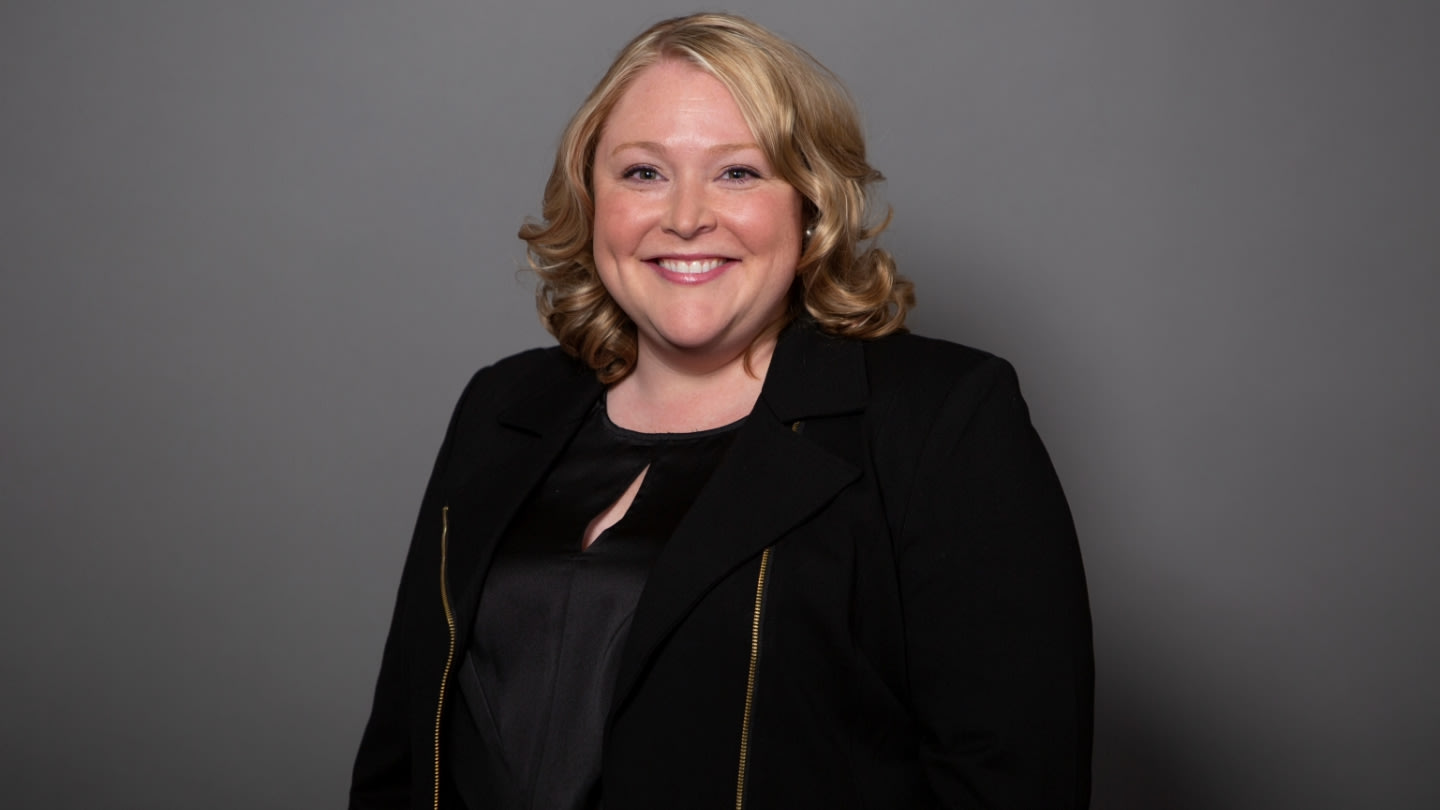
The association’s 100th president discusses professional autonomy, sustainable careers, leadership, and expanding dental hygiene’s role in healthcare.
Jessica August, MSDH, RDH, CDA, FADHA, has spent nearly two decades working across clinical practice, higher education, and academic leadership. Now, as the 100th president of the American Dental Hygienists’ Association (ADHA), she is bringing those experiences together as she helps guide the organization and the profession through a period of change.
August serves as assistant dean of Allied Dental Education Programs at Yakima Valley College in Washington, where she provides administrative leadership for allied dental education programs. Her career has also included faculty and administrative roles in dental hygiene and allied health education, and she has served ADHA at the local, state, and national levels.
Education and leadership development are especially important to August. Her experience preparing future dental hygienists has given her a perspective that extends beyond the patients she has personally treated to the many more who will ultimately receive care from the students and professionals she has helped educate. She sees leadership not simply as a position or title, but as something hygienists can demonstrate through patient advocacy, mentorship, critical thinking, and engagement with their profession.
August begins her presidency as ADHA moves forward with its 2026–2028 Strategic Plan. Its six goals address workforce; professional autonomy; clinical excellence and professional achievement; professional recognition, visibility, and influence; community and membership engagement; and foundational capacity. Among August’s priorities are helping hygienists build more fulfilling and sustainable careers, advancing professional autonomy, strengthening their role within the broader healthcare system, and developing the profession’s next generation of leaders.
That broader healthcare role is particularly important to August. She envisions dental hygienists contributing to prevention, education, screening, and early disease identification in a wider range of settings while collaborating more extensively with other healthcare professionals. For August, expanding the profession also means considering not only where dental hygienists are permitted to practice, but where their education and expertise can have the greatest impact on health.
August will have an opportunity to discuss these ideas with hygienists from across the country when ADHA26 convenes September 26 through 28 in Fort Worth, Texas. With the theme “The Heart of Hygiene,” the Annual Conference will bring the dental hygiene community together for education, professional development, recognition, and connection.
In the following interview with Inside Dental Hygiene, August discusses the values that have shaped her career, her goals as ADHA president, professional autonomy, sustainable career pathways, and her vision for dental hygiene within the larger healthcare system. Throughout these topics, she returns to a central idea: Dental hygienists at every stage of their careers have the ability to lead, contribute, and help shape the future of their profession.
Inside Dental Hygiene: What do you find most rewarding about being a dental hygienist, and what aspects of the profession are most meaningful to you personally?
Jessica August, MSDH, RDH, CDA, FADHA: What I have always found most rewarding about dental hygiene is making a meaningful difference in people’s health. Earlier in my career, that meant building relationships with patients, earning their trust and helping them better understand their oral health and their role in maintaining it.
One patient who has stayed with me was someone who came into care with significant anxiety about dental treatment and very little confidence in their ability to improve their own health. Over time, through education, encouragement, and a relationship built on trust, I watched the patient become more comfortable asking questions, taking ownership of their oral health, and realizing that small changes can make a significant difference. It was a reminder that dental hygiene is not just about providing clinical care; it is about helping people develop the knowledge, confidence, and ability to take an active role in their health.
What has become especially meaningful to me over the course of my career is understanding that the impact of a dental hygienist can extend far beyond the individual patient.
As an educator and now an administrator in dental hygiene education, I have the privilege of preparing the next generation of dental hygienists. I get to watch students develop their clinical judgment, discover their voice, build confidence, and begin to understand the difference they can make in the lives of their patients and communities.
I think about one student in particular who initially struggled to see herself as a confident clinician. With mentorship, practice, and experience, I watched her begin to trust her clinical judgment and find her voice. Seeing that transformation was very rewarding because I knew the confidence she developed would impact not only her career, but also the patients she would care for.
That has given me a different perspective on the profession. I am no longer only thinking about the patients I can personally reach. I am thinking about all the patients who will be reached by the dental hygienists we prepare.
For me, that is one of the greatest privileges of this profession. I have had the chance to make a difference through patient care, and now I have the opportunity to extend that impact by preparing future dental hygienists and developing future leaders.
IDH: What principles or values have guided your approach to patient care throughout your career, and how have those values influenced your work as an educator and association leader?
August: The values that have guided me throughout my career are respect, compassion, integrity, evidence-based practice, and empowerment.
Every patient deserves to be heard, respected, and treated as an individual. Our responsibility is to provide people with the information and support they need to participate in decisions about their health. These values have shaped not only how I care for patients, but also how I teach and lead.
As an educator, my goal has never been to just prepare students to become competent clinicians. I want to help develop confident professionals who think critically, advocate for their patients and their profession and recognize their capacity to lead.
I am deeply committed to developing the next generation of dental hygiene leaders. Leadership does not require a title. It can mean speaking up for a patient, mentoring a colleague, advocating for better access to care, challenging outdated systems or simply being willing to ask, “Is there a better way?”
I bring that mindset into my teaching by encouraging students to question the “why” behind what they are learning. For example, when a student encounters a clinical situation where the traditional approach may not fully meet a patient’s needs, I encourage them to pause and ask what the evidence tells us, listen to the patient’s concerns and preferences, and consider whether another approach might provide better care. This teaches students that evidence-based practice is not simply about following guidelines; it is about bringing together the best available evidence, clinical judgment and the individual needs of the patient. In those moments, I am not just teaching a clinical skill; I am teaching students to think critically, make informed decisions and advocate for better outcomes.
As an association leader, that commitment has become even more important to me. The future of our profession depends on developing people who are willing and prepared to lead it. I believe our responsibility as leaders is not only to advance the profession, but also to create opportunities for others to find their voice, develop their skills and become engaged in shaping its future.
My work as a clinician, educator, and association leader is connected by empowering others. I want patients to feel that they can take an active role in their health. I want students to feel that they can become confident professionals who use evidence and critical thinking to guide their practice. And I want dental hygienists to realize that they have both the ability and the responsibility to shape the future of our profession.
IDH: What do you most hope to do during your ADHA presidency?
August: My greatest goal during my presidency is to advance ADHA’s 2026–2028 Strategic Plan in alignment with our new mission and vision and help turn those priorities into progress for dental hygienists.
I see my role as building on the work that has already been done and helping move those priorities forward. That includes advancing professional autonomy, strengthening the role of dental hygienists within the broader healthcare system, supporting fulfilling and sustainable career pathways, and ensuring that dental hygienists have opportunities to practice to the full extent of their education, training and licensure.
I also want to strengthen the connection between ADHA and the individual hygienist. I want dental hygienists to see themselves reflected in our organization and understand that ADHA is their professional home and their collective voice.
As an educator, I am deeply committed to developing the next generation of leaders. I want us to create opportunities for dental hygienists at every stage of their careers to become engaged, develop their leadership skills, and see the influence they can have on the profession.
Ultimately, I hope my presidency creates momentum around our strategic priorities while making ADHA feel more connected, relevant, and accessible to the dental hygienists we serve.
If we can move our strategic plan forward while bringing more dental hygienists into the conversation and helping them see themselves as active participants in the future of our profession, I will consider that a meaningful accomplishment of my presidency.
IDH: What changes do you believe are most important to helping hygienists build more fulfilling, sustainable careers?
August: I think we need to broaden the conversation beyond asking, “Are there jobs for dental hygienists?”
The more important question is, “Can dental hygienists build the kind of careers they want and sustain them over time?”
That means looking at compensation, benefits, workload, workplace culture, flexibility, professional autonomy, advancement, and the ability to use the full scope of our education and training. It also means recognizing that a fulfilling career does not look the same for everyone. One dental hygienist may want to build a career in clinical practice. Another may discover a passion for public health, education, research, administration, advocacy, entrepreneurship, or another area of healthcare. We need to create a profession where those possibilities are visible, accessible and sustainable.
As an educator, I think a lot about how we prepare students for their careers. We should not only prepare them to pass a board examination and obtain a license. We should prepare them to understand their professional value, navigate their careers, advocate for themselves and discover the many ways they can contribute to healthcare.
A sustainable profession is one in which a dental hygienist can envision a future, not simply a position.
IDH: Professional autonomy is a major focus of the ADHA strategic plan. Where do you see the greatest opportunities for progress in this area?
August: I see tremendous opportunity to continue demonstrating that dental hygienists are healthcare professionals who are educated, licensed, and capable of providing safe, effective care based on their professional judgment.
For me, autonomy is not about separating dental hygiene from dentistry or from the larger healthcare system. It is about ensuring that dental hygienists have the ability to make appropriate professional decisions and provide the care they are educated and licensed to provide.
Some of our greatest opportunities are in modernizing laws and regulations, expanding direct access and alternative practice models, removing unnecessary barriers to practice, and educating policymakers and other healthcare professionals about the role dental hygienists can play.
We also need to continue demonstrating the value of these models through evidence and outcomes. That work is already underway. In February, ADHA published Dental Hygiene Diagnosis: Defining the Essential Role of Diagnostic Decision-Making in Dental Hygiene, making the case for the dental hygiene diagnosis as a core component of the clinical judgment our profession is educated and licensed to provide. In August, we released Dental Hygiene Self-Governance: An Ethical and Economic Imperative, which lays out the ethical and economic case for the profession governing its own education, practice, and licensure. These are the kinds of evidence-based resources we can put in front of policymakers, partners, and the public that demonstrate our value, not just assert it. When we demonstrate that dental hygienists improve access, prevention, patient experience, and health outcomes, we strengthen the case for expanding our role.
But I also believe autonomy requires us to recognize and embrace our professional responsibility. We must see ourselves as healthcare professionals. We must be able to clearly articulate our education, expertise, and value. And we must be willing to advocate for the role we can play in healthcare, while also continuing to hold ourselves accountable to high standards of education, ethics, evidence-based practice and patient care.
Autonomy is something we pursue through policy, but it is also something we demonstrate through professional leadership and accountability.
IDH: What would you like the role of the dental hygienist to look like within the broader healthcare system in the years ahead?
August: I want dental hygienists to be recognized as integral to healthcare. We know that oral health is fundamental to overall health, yet our healthcare system has historically treated the two as separate. Dental hygienists are uniquely positioned to help bridge that gap through prevention, education, screening, early identification of disease, and connections to other healthcare professionals.
I envision dental hygienists practicing in a much broader range of settings and collaborating with physicians, nurses, pharmacists, behavioral health professionals, community health workers, and other members of the healthcare team.
We need to rethink where and how dental hygiene care is delivered. If our goal is to improve health and increase access to care, we should be asking where dental hygienists can have the greatest impact.
I want us to move from asking: “Where can a dental hygienist practice?” to asking: “Where can a dental hygienist improve health?” That shift in perspective creates an entirely different conversation about what our profession can contribute.
IDH: What are you most looking forward to at this year’s Annual Conference, and what do you hope attendees will take away from the experience?
August: This year we are in Fort Worth, Texas, from September 26-28, for ADHA26, with a theme that captures why being at the conference matters: The Heart of Hygiene. What I am most looking forward to is being together as a community of dental hygienists. There is something powerful about bringing dental hygienists from across the country together in one place. We learn from one another, challenge one another and remind one another why this profession matters.
I am also looking forward to celebrating our profession through the Awards for Excellence and President’s Dinner. These moments allow us to recognize the people who are advancing dental hygiene, celebrate the contributions of our colleagues, and come together around the work we share.
I am particularly excited to hear from dental hygienists working in different practice settings and at different stages of their careers, as well as from our students, some of whom are presenting their work and reminding us all where our profession is headed. Valuable conversations happen outside the educational sessions, when we learn from what our colleagues are doing in their communities and imagine what those ideas might make possible elsewhere. I hope attendees leave feeling inspired, connected, and empowered.
I want them to take something they learned and put it into practice. But even more importantly, I want them to leave with a sense that they have a role in shaping the future of dental hygiene.
I hope people walk away thinking: “There is a place for me in this profession, and there is something I can do to make it better.”
Our connection to one another and to the work we share is, to me, the heart of hygiene.
IDH: Is there anything else you would like to share with your fellow dental hygienists?
August: I would remind my fellow dental hygienists that we are part of a profession with enormous potential, and each of us has a role in realizing that potential.
You do not have to hold a leadership position or have a particular title to make a difference. Leadership can begin with how you show up for your patients, your colleagues, your students, and your profession. It can mean using your voice, sharing your expertise, challenging assumptions, and being willing to imagine something different from the way things have always been done.
I am so very proud to be a dental hygienist, and I am optimistic about where our profession will go. I hope we continue to think bigger about the role dental hygienists can play in improving health and expanding access to care.
Our greatest strength has always been our people. If we support one another, develop new leaders, use our collective voice, and have the courage to imagine what is possible, the future of dental hygiene is incredibly bright.
Figures and Images