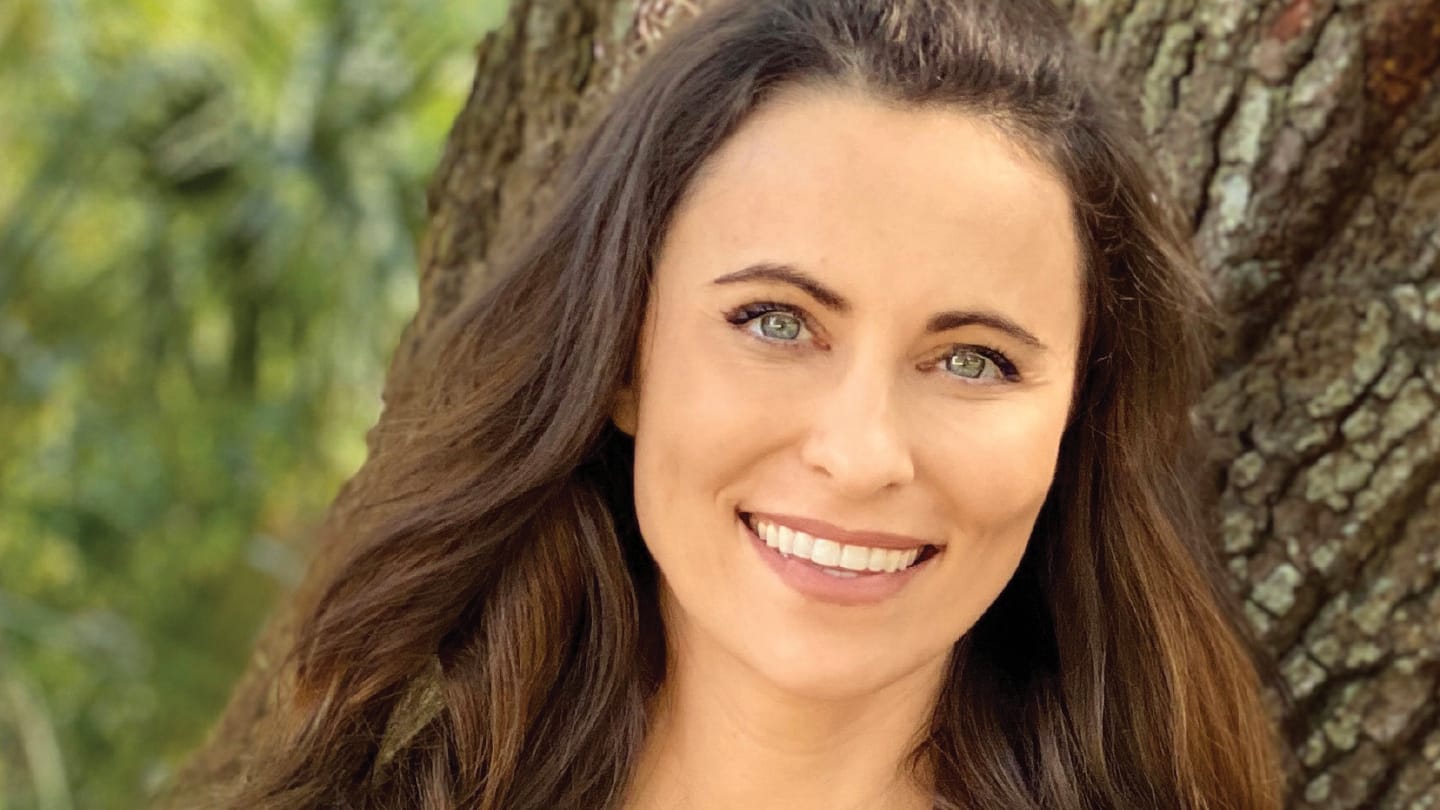
For Michelle Strange, MSDH, RDH, dental hygiene has always offered an opportunity to combine her fascination with science with something equally important: taking care of people. Strange began her career as a dental assistant and was only 19 when she decided to become a dental hygienist. More than two decades later, that decision has led to a career encompassing clinical practice, education, entrepreneurship, infection prevention, and professional communication.
“I knew that I wanted to keep going in dentistry,” Strange says. “I was fascinated by the science, and I loved the patient care aspect. I really liked prevention and taking care of people, so I thought dental hygiene would be the best fit.”
After earning an associate degree in science and dental hygiene, Strange received a bachelor’s degree in health science from the Medical University of South Carolina and a master’s degree in dental hygiene education from the University of Bridgeport. Her career has included speaking, writing, podcasting, consulting, and educating dental professionals, as well as founding Level Up Infection Prevention. Following a three-year period traveling the country as “The Roaming Dental Hygienist,” Strange settled in Colorado and, in 2025, acquired Smile Logic, an established dental hygiene practice in Broomfield.
Becoming a practice owner has given Strange the opportunity to put her own philosophy of care into focus. She renovated the office, incorporated the technologies and products she prefers, and added another hygienist to the practice. Throughout those changes, however, the patient experience has remained central.
“I want the patient to always feel seen and never shamed at their appointment with us,” Strange says. “We try to meet them where they are as they learn more about their overall health, including their oral health. I’m always trying to find ways to be efficient, effective, and thoughtful about the appointment so that they aren’t scared or anxious and feel like they were really taken care of.”
As the practice owner, Strange is also responsible for evaluating the products and technologies used to deliver that care. Although many hygienists do not have that same purchasing authority, their firsthand experience with clinical products can provide valuable insight for dentists making those decisions. She distills her own criteria into three words: accuracy, efficiency, and simplicity.
“A product has to give me reliable, reproducible results, especially since I’m not the only hygienist here and I want continuity among us,” she says. “It also has to save chair time.”
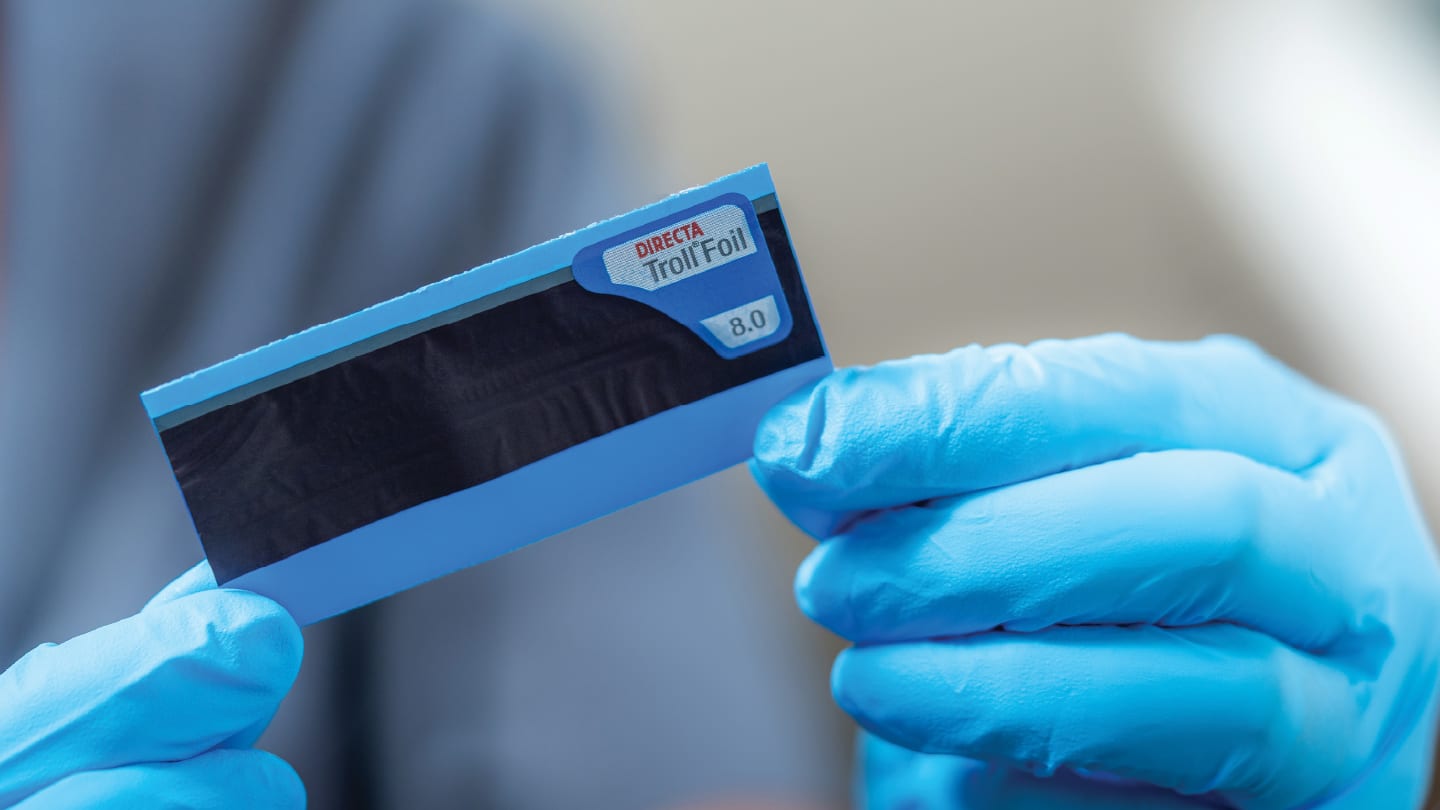
One product that meets those criteria for Strange is TrollFoil articulating foil, available from Directa USA. Having previously used TrollFoil while working in conventional dental offices, first as a dental assistant and later as a hygienist, she now incorporates it into procedures at her independent dental hygiene practice.
Strange has traditionally used articulating products to evaluate occlusion, including after placing sealants and interim glass-ionomer restorations. More recently, she has found it useful when removing and replacing implant-supported prostheses, a procedure that is within a dental hygienist’s scope of practice in Colorado.
“For me, it’s really critical to make sure that I put the prosthesis on correctly and that the occlusion I started with is the exact same occlusion I ended with,” she says. “I use TrollFoil for that.”
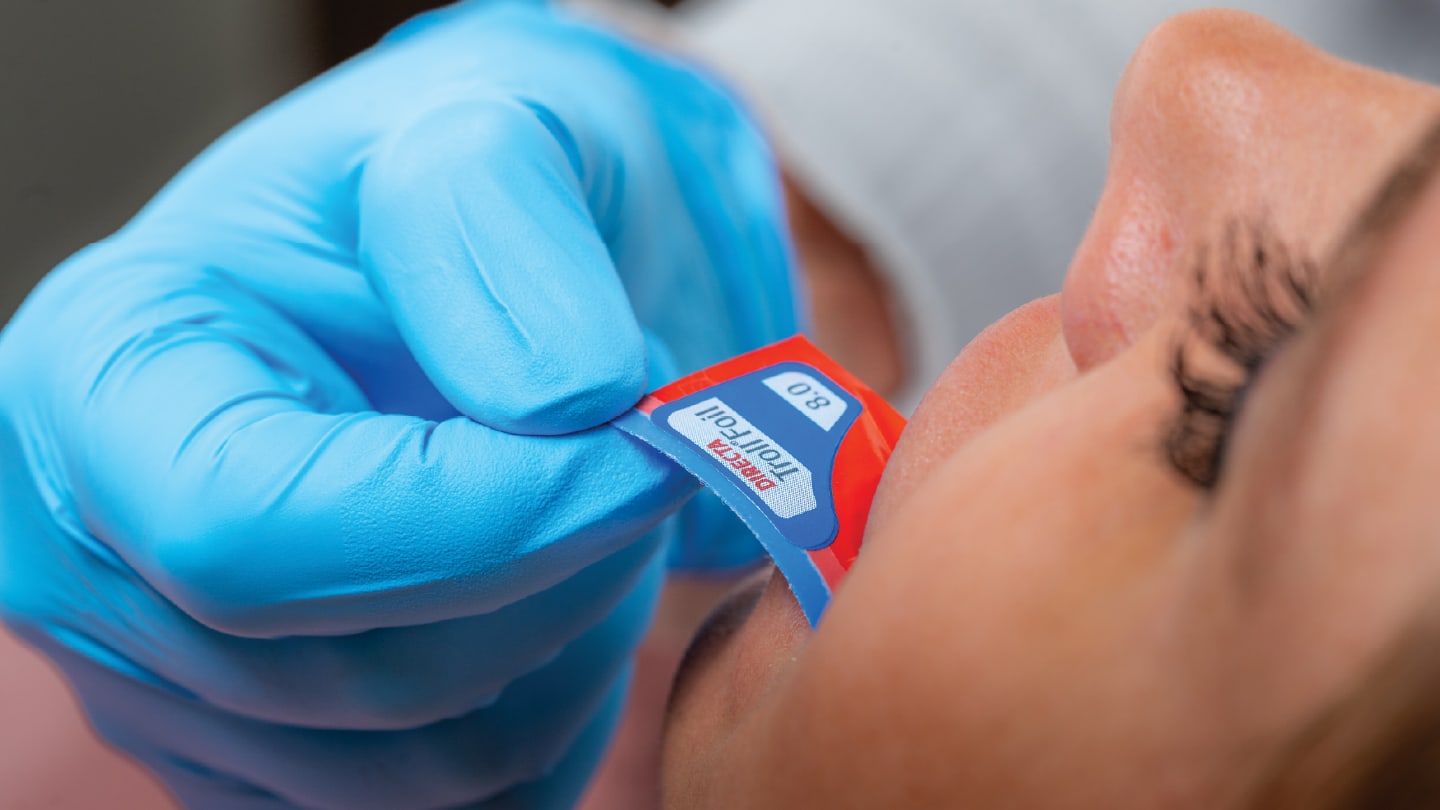
To help verify that relationship, Strange takes advantage of TrollFoil’s availability in both blue and red. Before removing the prosthesis, she uses blue foil to record the initial contacts. After cleaning and replacing the prosthesis, she uses red foil to evaluate the contacts again.
“If my marks afterward don’t align with the marks from before, I can see the color differences and know that I did not get the prosthesis back in the exact same position,” she explains. “Having the two colors immediately available is very helpful.”
TrollFoil is available in 8-µm red and blue versions as well as a 4.5-µm blue version. The double-sided articulating foil produces precise markings on wet, dry, and highly polished surfaces and comes mounted on its own rigid frame, eliminating the need for forceps.
For Strange, the thinness of the foil contributes directly to the precision of the information it provides. She contrasts its small, defined markings with the larger marks she has observed with thicker articulating materials.
“Thickness directly affects accuracy,” Strange says. “A thicker medium spreads the mark over a larger area, so you can end up looking all over the place for the one tiny spot that the patient might be feeling. At 8 µm, and especially at 4.5 µm, that mark corresponds much more closely to the actual contact point.”
Strange emphasizes that she uses that information within her scope of practice and does not equilibrate or remove healthy tooth structure. She can, however, make appropriate adjustments to sealants and interim restorations that she has placed, as well as evaluate a prosthesis she has removed and replaced.
The foil’s integrated frame is another seemingly simple feature that has had a meaningful effect on her workflow. Strange removes the protective strip and can take the foil directly to the mouth without loading separate forceps.
“The built-in frame definitely changes my workflow the most,” she says. “There are no forceps that I have to load and then autoclave afterward.”
For Strange, whose professional work includes extensive education in infection prevention, eliminating that instrument has another benefit. She notes that the interlocking surfaces of traditional articulating-paper forceps can present cleaning challenges before sterilization. Removing forceps from the process simplifies clinical setup and instrument reprocessing.
TrollFoil’s ability to mark wet surfaces also contributes to its ease of use. Strange advises clinicians using it for the first time to have patients tap gently rather than grind and to become accustomed to the smaller markings produced by the thin foil. “Trust the small marks,” she says. “If you’re used to bigger marks that almost create a smudge, the tighter marks can look like less, but they’re actually just more precise.”
Although Strange now practices independently, she believes occlusal assessment with articulating foil has relevance for hygienists working in traditional dental practices as well. During her years working alongside dentists, she sometimes checked and marked patients’ occlusion before the dentist entered for an examination, providing information that could contribute to discussions about about grinding, clenching, fremitus, and other clinical findings.
“Don’t think it’s just for procedures,” Strange says. “It can be part of the exam as well.” For dentists, listening to hygienists about the products they use can help support this type of collaboration and an efficient clinical workflow.
That perspective illustrates the larger role Strange sees for dental hygienists as engaged members of the diagnostic and preventive care team. An occlusal marking does not replace the dentist’s diagnosis, but careful observation can provide additional information that contributes to a more comprehensive examination and a productive clinical conversation.
Strange says her experience with Directa USA has been equally straightforward. She has used the company’s preventive products for years and appreciates its emphasis on products that reflect the same characteristics she values in her own practice. “They think about products in terms of precision and making them helpful and simple,” she says. “Those are all the things I want from a company.”
For Strange, TrollFoil demonstrates how even a familiar component of everyday dentistry can contribute to a higher level of care when it provides more useful information with fewer unnecessary steps. Whether she is confirming that an implant-supported prosthesis has been replaced accurately, evaluating a restoration within her scope of practice, or contributing observations to a dentist’s examination, her objective remains the sa
Key Points
- TrollFoil is available in 8-µm red and blue versions and a 4.5-µm blue version, providing thin articulating media for precise and consistent occlusal markings.
- The double-sided foil is designed to mark on wet, dry, and highly polished surfaces as well as on metallic and nonmetallic restorations.
- Each foil is mounted on a rigid frame with a removable protective strip, eliminating the need for separate forceps and helping simplify clinical handling. me: obtain accurate information efficiently and use it thoughtfully in the service of the patient.
Figures and Images
TrollFoil
TrollFoil
Michelle Strange, MSDH, RDH